
Comparing Traditional and Modern Network Security
This post compares traditional perimeter-based network security with modern zero-trust approaches, explaining how evolving threats like APTs and insider attacks forced fundamental changes in security thinking.

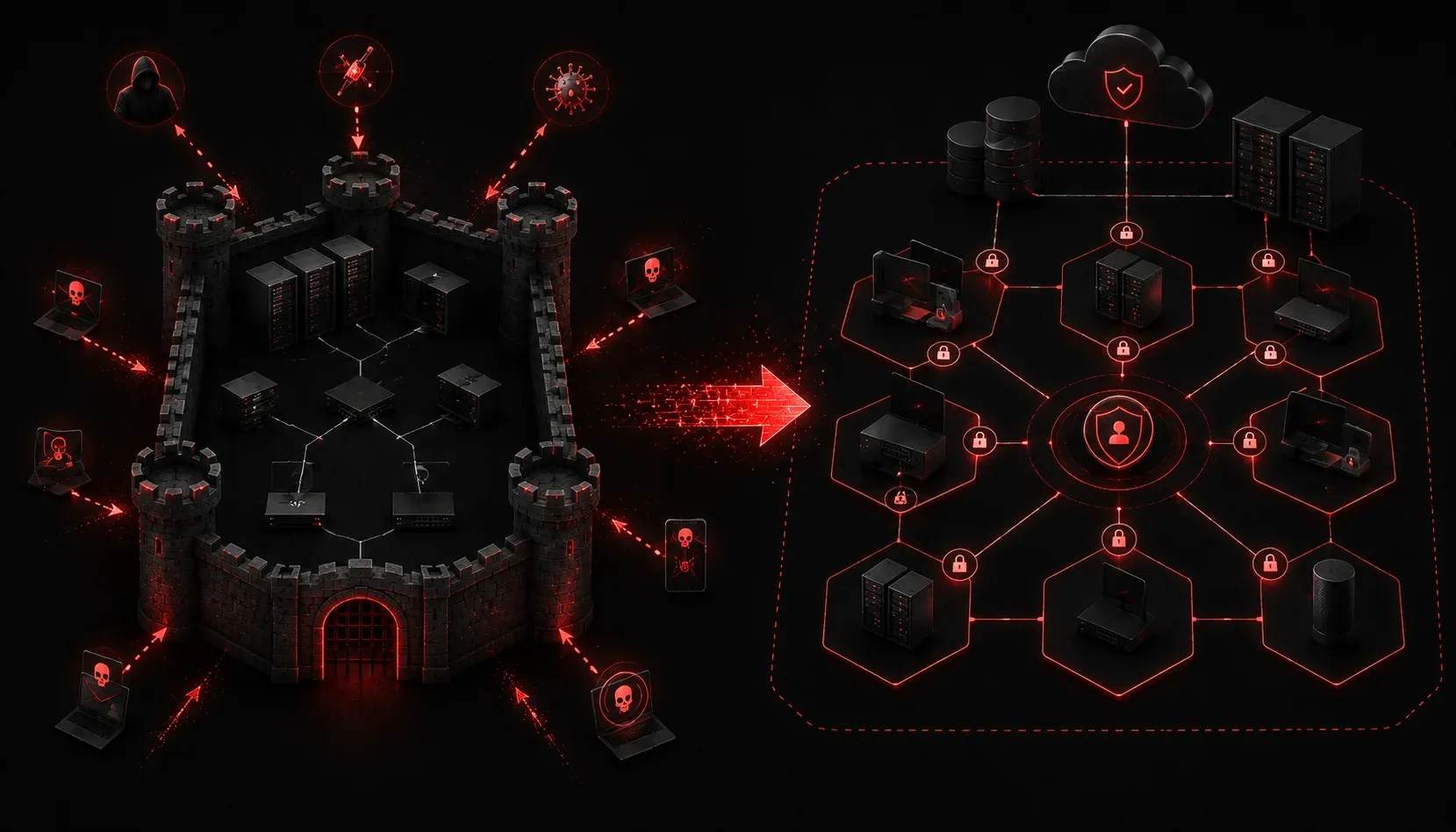
Network security has undergone dramatic changes over the past two decades. What worked to protect networks in the early 2000s simply isn't enough to defend against today's sophisticated threats. Understanding this evolution is crucial for anyone studying networking fundamentals.
Let's explore how network security practices have transformed and why these changes were necessary.
Traditional Network Security: The Castle Wall Approach
Traditional security operated on a simple premise: build a strong perimeter and trust everything inside. This approach made sense when networks were simpler and most users worked from centralized offices.
Key Characteristics of Traditional Security
- Perimeter-focused: Firewalls at network edges with minimal internal segmentation
- Static rules: Security policies that changed infrequently
- Location-based trust: Systems inside the network perimeter were generally trusted
- Signature-based detection: Antivirus and intrusion detection systems looking for known threats
- Centralized management: Security controlled from a single point
A typical traditional setup might include enterprise firewalls (such as the Cisco PIX series) at the network edge, basic access control lists (ACLs) on switches, and endpoint antivirus software. Internal network traffic often flowed with minimal inspection once it passed the perimeter controls.
Why Traditional Security Worked... Then
This approach succeeded because the threat landscape was different. Attackers typically targeted systems from the outside, malware spread slowly, and most employees worked from office locations on managed devices.
Modern Network Security: Zero Trust and Beyond
Modern security acknowledges a harsh reality: threats come from everywhere, including inside your network. The rise of cloud computing, mobile devices, and remote work has fundamentally changed how we approach network protection.
Core Principles of Modern Security
- Zero Trust: Never trust, always verify - regardless of location
- Identity-centric: Security decisions based on user and device identity
- Microsegmentation: Network divided into small, isolated zones with granular access controls
- Behavioral analysis: Detecting threats based on unusual patterns
- Cloud-first: Security services delivered from the cloud
- Continuous monitoring: Real-time visibility across all network segments
Modern implementations might include software-defined perimeters (SDP) that create encrypted micro-tunnels for each application access, multi-factor authentication (MFA) for every access attempt, next-generation firewalls (NGFWs) with deep packet inspection, security information and event management (SIEM) platforms, and extended detection and response (XDR) tools that correlate threats across multiple security layers using machine learning algorithms.
How Evolving Threats Changed Everything
Several key developments forced this transformation in network security thinking:
Advanced Persistent Threats (APTs)
Unlike traditional malware that caused immediate damage, APTs hide in networks for months or years. Traditional perimeter security couldn't detect these "low and slow" attacks that moved laterally through internal networks.
Insider Threats
Studies show that 30-40% of security breaches involve insiders. Traditional security's location-based trust model left organizations vulnerable to malicious or compromised employees.
Mobile and Cloud Adoption
When users access corporate resources from personal devices and cloud applications, the traditional network perimeter simply doesn't exist. Security had to become device and identity-aware.
Ransomware and Lateral Movement
Modern ransomware doesn't just encrypt one computer; it spreads throughout the network. Traditional flat network architectures made lateral movement trivial for attackers.
Network Security Comparison: Side by Side
Here's how traditional and modern approaches differ in practice:
Access Control: Traditional security used network location as the primary trust factor. Modern security requires continuous authentication regardless of location.
Network Architecture: Traditional networks were often flat with minimal segmentation. Modern networks implement microsegmentation (dividing the network into small, isolated zones where each segment has its own security policies) using software-defined networking (SDN) and virtual LANs (VLANs).
Threat Detection: Traditional systems looked for known bad signatures. Modern systems analyze behavior patterns and use machine learning to detect unknown threats.
Response Speed: Traditional security relied on manual processes for incident response. Modern security automates responses through security orchestration and automated response (SOAR) platforms.
What's Next
Understanding these foundational differences in security approaches sets the stage for diving deeper into specific modern security technologies. In our next post, we'll explore how Zero Trust architecture actually works in practice, including the specific protocols and configurations that make it possible.
Tools and resources for this topic
- CompTIA Network+ Study Guide — Comprehensive N10-009 exam preparation covering all five domains.