
What Is Python and Why Should You Learn It
Python is a beginner-friendly, high-level programming language known for its readable syntax and versatility. It's perfect for newcomers to programming because it emphasizes simplicity while being powerful enough for real-world applications in web development, data science, automation, and more.

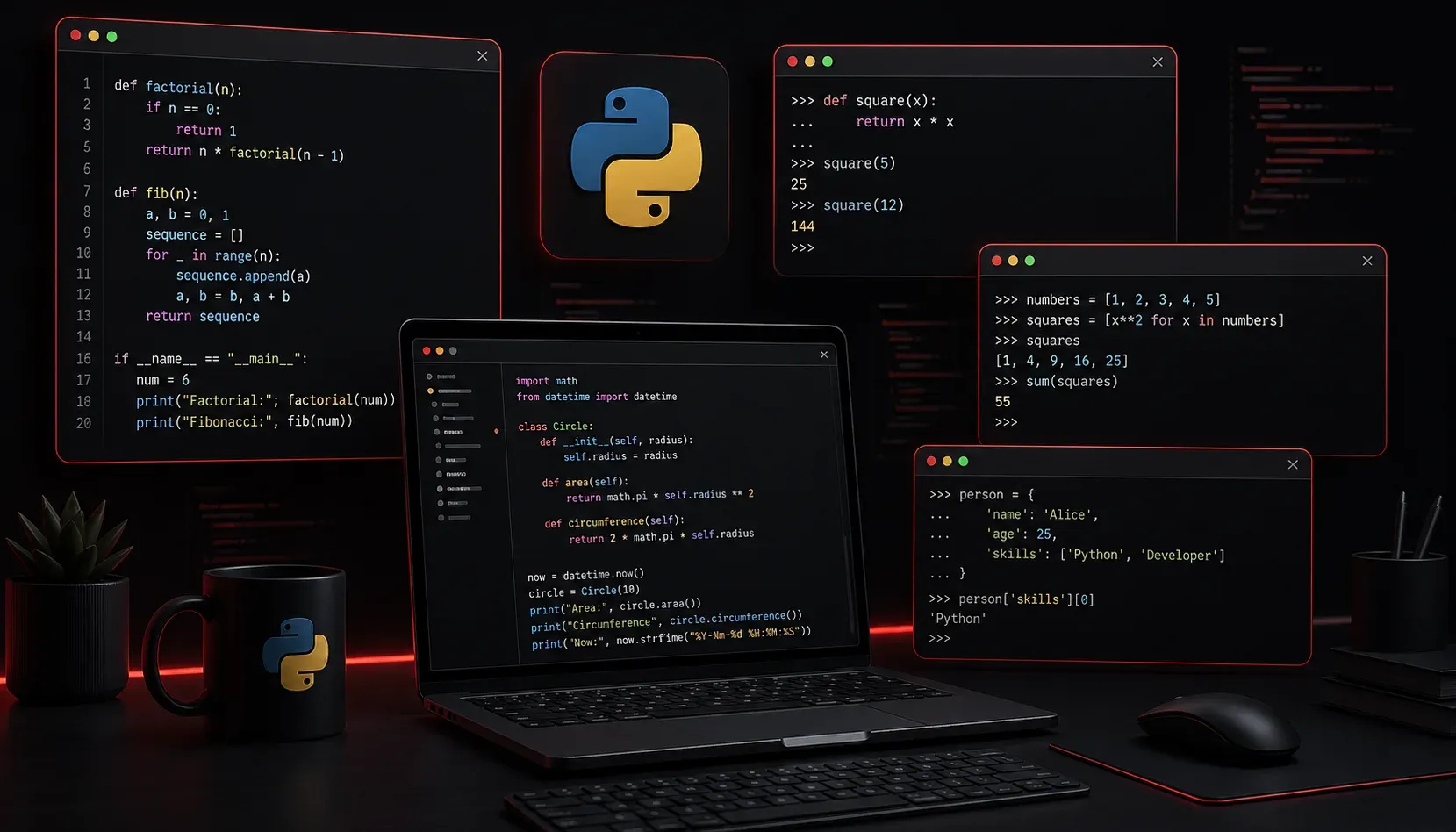
If you're starting your programming journey, you've probably heard about Python everywhere. From data science courses to web development tutorials, Python seems to be the language everyone's talking about. But what exactly is Python, and why has it become so popular among beginners and experienced developers alike?
What Is Python?
Python is a high-level, interpreted programming language created by Guido van Rossum and first released in 1991. Unlike languages that require compilation before running, Python code executes directly, making it incredibly fast to test and iterate on your ideas. While this interpreted nature makes development and debugging faster, it's worth noting that Python programs may not execute as quickly as compiled languages like C++ or Rust when it comes to raw performance.
What makes Python special is its philosophy of simplicity and readability. The language was designed with the principle that code should be easy to read and write. This means you can focus on solving problems rather than wrestling with complex syntax.
Here's a simple example that demonstrates Python's readability:
# Calculate the area of a rectangle
length = 10
width = 5
area = length * width
print(f"The area is {area} square units")
Compare this to equivalent code in other languages, and you'll immediately see why Python has earned its reputation for being beginner-friendly.
Why Python Is Perfect for Beginners
Readable and Intuitive Syntax
Python's syntax closely resembles natural language. When you write if temperature > 30:, it reads exactly like you'd think about the problem. This reduces the mental overhead of learning programming concepts because you're not simultaneously fighting with cryptic syntax.
Immediate Feedback
As an interpreted language, Python gives you instant results. You can open a Python interpreter, type a command, and see the output immediately. This interactive nature makes learning much more engaging than waiting for compilation cycles.
Extensive Standard Library
Python comes with batteries included. Need to work with dates? There's a datetime module built right in. Want to make HTTP requests? While not part of the standard library, the popular third-party requests library has you covered and is easy to install. This vast ecosystem means you can accomplish real tasks quickly, which keeps motivation high during the learning process.
What Can You Build with Python?
Python's versatility is one of its greatest strengths. Here are some popular applications:
- Web Development: Frameworks like Django and Flask power websites for companies like Instagram and Pinterest
- Data Science and Analytics: Libraries like pandas and NumPy make Python the go-to choice for data analysis
- Automation and Scripting: Perfect for automating repetitive tasks and system administration
- Network Programming: Excellent for network automation, especially in Cisco environments
- Artificial Intelligence: TensorFlow and PyTorch make Python dominant in machine learning
- Game Development: Libraries like Pygame enable game creation
Python in the Real World
Major companies rely on Python for critical systems. Google uses Python extensively in their backend services, Netflix uses it for their recommendation algorithms, and NASA uses Python for scientific computing. In the networking world, Python has become essential for network automation, with tools like Ansible and NAPALM making network management more efficient.
Here's a simple example of how Python might automate a network task:
# Simple network device inventory
devices = ["router1", "switch1", "firewall1"]
for device in devices:
    print(f"Checking status of {device}...")
    # In a real script, this would connect and check the device
The Learning Advantage
Learning Python first gives you several advantages. The concepts you learn (variables, loops, functions, and object-oriented programming) transfer directly to other languages. However, Python's gentle learning curve means you can focus on understanding these fundamental concepts without getting bogged down in complex syntax.
Python also has an incredibly supportive community. When you get stuck, there are countless tutorials, forums, and resources available. The official Python documentation is well-written and beginner-friendly, unlike some other languages, where documentation can be intimidating.
Getting Started Is Easy
One of Python's biggest advantages is how quickly you can start writing useful programs. You can install Python from python.org, and within minutes, you're writing code that solves real problems. No complex development environments or lengthy setup processes required.
What's Next
Now that you understand what Python is and why it's an excellent choice for beginners, the next step is setting up your development environment. In our next post, we'll walk through installing Python on your system and setting up your first development workspace, so you can start writing code immediately.