
Common Challenges in Securing Enterprise Infrastructure
This post explores the major challenges in securing enterprise infrastructure, including complexity and scale issues, legacy system integration problems, and resource constraints. It provides practical security solutions like network segmentation, centralized monitoring, and risk-based approaches t

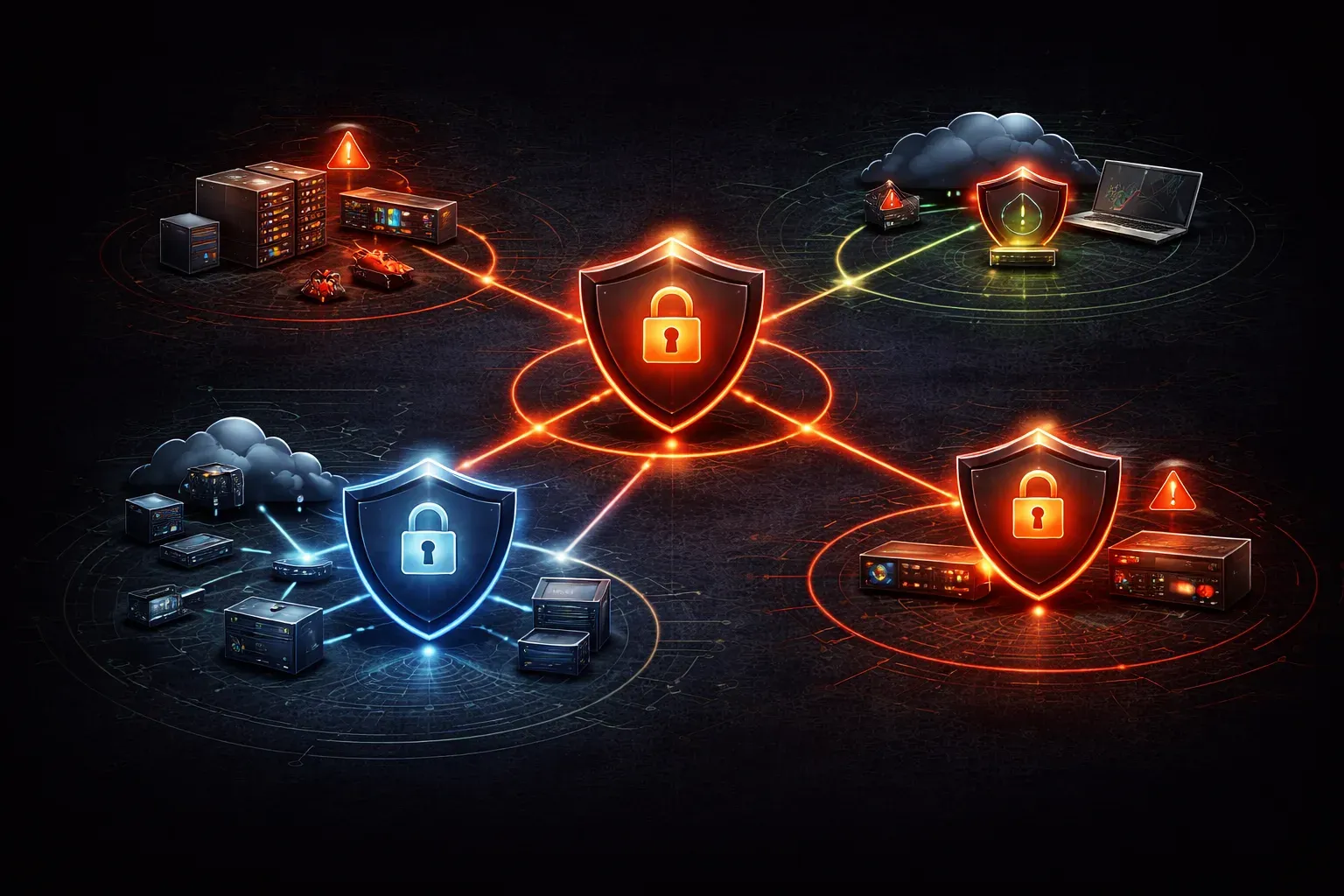
Securing enterprise infrastructure presents unique obstacles that can overwhelm even experienced IT professionals. Unlike home networks or small business setups, enterprise environments bring complexity, scale, and legacy systems that create numerous challenges securing enterprise networks effectively.
The Scale and Complexity Challenge
Enterprise networks often span multiple locations, support thousands of users, and integrate dozens of different technologies. This complexity creates several immediate security challenges:
- Attack Surface Expansion: Every additional device, application, and network segment increases potential entry points for attackers
- Visibility Gaps: IT teams struggle to maintain complete visibility across all network segments and devices
- Inconsistent Security Policies: Different departments may implement conflicting security measures
Consider a typical enterprise with headquarters, remote offices, cloud services, and mobile workers. Each environment may use different security tools, creating gaps where threats can hide.
Legacy System Integration Issues
Many organizations run critical applications on systems that weren't designed with modern security in mind. These enterprise issues include:
- Outdated Operating Systems: Systems running Windows Server 2008 (which lost Microsoft support in January 2020) or older Unix variants that lack modern security features
- Unsupported Applications: Custom software that can't be updated or patched
- Protocol Limitations: Legacy systems using protocols like
TelnetorFTPthat transmit data in clear text
For example, a manufacturing company might rely on industrial control systems that use decades-old protocols. To address this, organizations can implement compensating controls such as:
- Isolating legacy systems in dedicated VLANs with strict firewall rules
- Using protocol gateways to translate between legacy and modern secure protocols
- Implementing network monitoring specifically tailored for legacy system traffic patterns
- Deploying jump boxes with modern security controls to access legacy systems safely
Resource and Budget Constraints
Security teams face constant pressure to do more with less. Common resource-related challenges include:
- Skills Shortage: Difficulty finding qualified cybersecurity professionals
- Tool Sprawl: Managing multiple security products that don't integrate well
- Alert Fatigue: Security teams are overwhelmed by false positives and noise
A typical security operations center might receive thousands of alerts daily, but lack the staff to investigate each one thoroughly.
Practical Security Solutions
Addressing these challenges requires a structured approach with proven security solutions:
Implement Network Segmentation
Divide your network into smaller, manageable segments using VLANs and firewalls. VLANs create logical network boundaries that prevent lateral movement of threats, while firewalls enforce access control policies between segments, ensuring that only authorized traffic flows between network zones:
interface GigabitEthernet0/1
 switchport mode access
 switchport access vlan 100
 switchport port-security
 switchport port-security maximum 2
This Cisco switch configuration places a port in VLAN 100 with port security enabled, limiting MAC addresses and providing basic network segmentation. Implementation steps include:
- Map your network topology and identify critical assets
- Design VLAN structure based on business functions (e.g., finance, HR, production)
- Configure inter-VLAN routing through firewalls with appropriate access control lists
- Test connectivity and monitor traffic patterns to ensure segmentation is working correctly
Establish Baseline Security Policies
Create consistent security standards across all environments:
- Define minimum security requirements for all systems
- Implement standardized access controls using Active Directory or similar systems
- Establish regular patching schedules and procedures
To implement these policies effectively:
- Use group policy objects (GPOs) in Windows environments to enforce security settings automatically
- Deploy configuration management tools like Ansible or Puppet for consistent Linux/Unix configurations
- Create security baselines using frameworks like CIS Controls or NIST guidelines
- Implement automated compliance scanning to identify policy violations
Deploy Centralized Monitoring
Use Security Information and Event Management (SIEM) systems to aggregate logs and detect threats across your entire infrastructure. Tools like Splunk or open-source alternatives like ELK Stack can provide the visibility needed to identify security incidents quickly.
Key implementation considerations:
- Start by identifying critical log sources (domain controllers, firewalls, web servers)
- Normalize log formats to enable correlation across different systems
- Create custom dashboards for different stakeholder groups
- Develop use cases and correlation rules based on known attack patterns
- Establish alerting thresholds to minimize false positives while maintaining sensitivity
Prioritize Risk-Based Approaches
Focus your limited resources on the most critical assets and highest-probability threats:
- Conduct regular risk assessments to identify your most valuable systems
- Implement layered security controls starting with your most critical assets
- Use threat intelligence to understand which attacks are most likely to target your industry
Building a Sustainable Security Program
Remember that enterprise security is a marathon, not a sprint. Start with fundamental controls like endpoint protection, network monitoring, and access management before moving to advanced technologies like artificial intelligence or machine learning-based security tools.
Document your security architecture and maintain an inventory of all systems and applications. This foundation will help you identify gaps and plan improvements systematically rather than reactively.
What's Next
Now that we've covered the major challenges in enterprise security, our next post will dive deep into security frameworks and how they provide structured approaches to managing these complex environments. We'll explore how frameworks like NIST and ISO 27001 can help organize your security efforts effectively.
Tools and resources for this topic
- CompTIA Security+ Study Guide — Full SY0-701 exam coverage including threats, vulnerabilities, and mitigation.