
How to Implement Security in Microservices Architecture
Learn how to implement effective security measures in microservices architecture, covering Zero Trust principles, API gateway security, container protection, and secrets management for distributed systems.

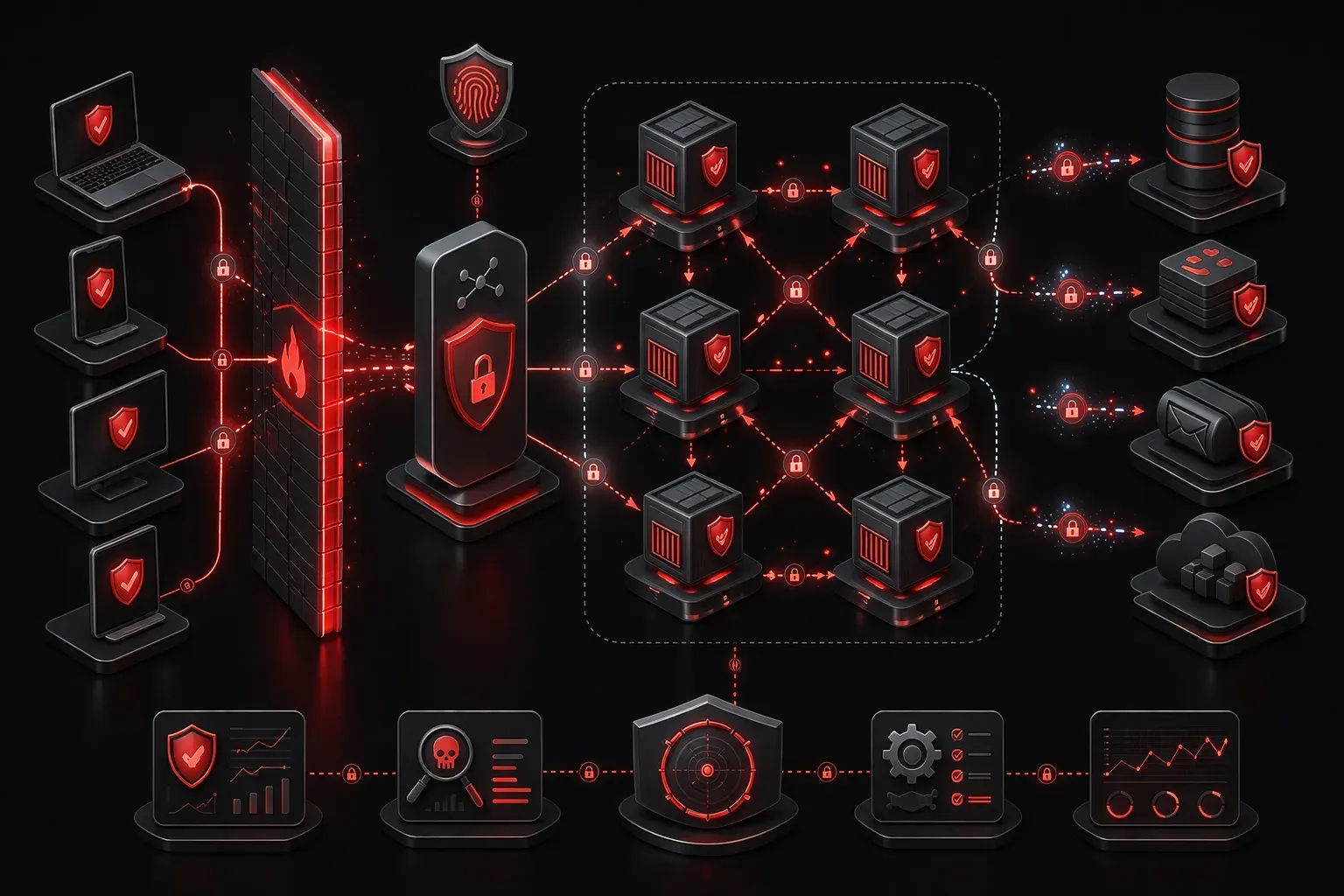
Microservices architecture has revolutionized how we build and deploy applications, but it also introduces unique security challenges. Unlike monolithic applications where security boundaries are well-defined, microservices create a distributed environment with multiple attack surfaces. Let's explore how to implement robust security in your microservices architecture.
Understanding Microservices Security Challenges
In a microservices environment, you're dealing with multiple independent services communicating over a network. Each service represents a potential entry point for attackers. Traditional perimeter-based security models fall short because there's no longer a single, well-defined perimeter to defend.
The primary security challenges include:
- Service-to-service communication vulnerabilities
- Authentication and authorization across distributed services
- Data protection in transit and at rest
- Monitoring and logging across multiple services
- Configuration management and secrets distribution
Implementing Zero Trust Architecture
The foundation of microservices security is adopting a Zero Trust model. This means never trusting any communication, even between internal services. Every request must be authenticated, authorized, and encrypted.
Start by implementing mutual TLS (mTLS) for all service-to-service communication. With mTLS, both the client and server present certificates to verify their identities:
# Example nginx configuration for mTLS
server {
    listen 443 ssl;
    ssl_certificate /etc/ssl/certs/service.crt;
    ssl_certificate_key /etc/ssl/private/service.key;
    ssl_client_certificate /etc/ssl/certs/ca.crt;
    ssl_verify_client on;

    location / {
        proxy_pass http://backend-service;
    }
}
API Gateway as Security Checkpoint
An API Gateway serves as your first line of defense and centralized security control point. It handles authentication, authorization, rate limiting, and request validation before traffic reaches your microservices.
Key security practices for API gateways include:
- Implementing OAuth 2.0 or JWT tokens for authentication
- Rate limiting to prevent DDoS attacks
- Input validation and sanitization
- API versioning and deprecation policies
Here's an example of implementing JWT validation:
import jwt
from functools import wraps

def token_required(f):
    @wraps(f)
    def decorated(*args, **kwargs):
        token = request.headers.get('Authorization')
        if not token:
            return jsonify({'message': 'Token missing'}), 401
        try:
            data = jwt.decode(token, app.config['SECRET_KEY'], algorithms=['HS256'])
        except:
            return jsonify({'message': 'Token invalid'}), 401
        return f(*args, **kwargs)
    return decorated
Container and Runtime Security
Most microservices run in containers, making container security essential. Implement these security practices:
Image Security: Use trusted base images and regularly scan for vulnerabilities. Tools like docker scan or Trivy can identify security issues:
# Scan container image for vulnerabilities
docker scan myapp:latest

# Use minimal base images
FROM alpine:3.18
RUN apk add --no-cache python3 py3-pip
Runtime Protection: Configure containers with minimal privileges using security contexts in Kubernetes:
apiVersion: v1
kind: Pod
spec:
  securityContext:
    runAsNonRoot: true
    runAsUser: 1000
    fsGroup: 2000
  containers:
  - name: app
    securityContext:
      allowPrivilegeEscalation: false
      readOnlyRootFilesystem: true
      capabilities:
        drop:
        - ALL
Secrets Management
Never hard-code secrets in your microservices. Use dedicated secrets management solutions like HashiCorp Vault, AWS Secrets Manager, or Kubernetes Secrets with encryption at rest enabled.
Implement secret rotation and use short-lived credentials where possible. Here's how to retrieve secrets from Vault:
import hvac

client = hvac.Client(url='https://vault.example.com')
client.token = os.environ['VAULT_TOKEN']

# Retrieve database credentials
secret = client.secrets.kv.v2.read_secret_version(path='database/config')
db_password = secret['data']['data']['password']
Monitoring and Incident Response
Implement comprehensive logging and monitoring across all services. Use distributed tracing to track requests across service boundaries and detect anomalous behavior. Centralize logs using tools like ELK stack or Splunk, and implement automated alerting for security events.
Set up security metrics dashboards to monitor authentication failures, unusual traffic patterns, and service communication anomalies.
What's Next
Now that you understand the fundamentals of microservices security implementation, the next step is diving deeper into specific security controls and compliance frameworks. In our upcoming post, we'll explore how to implement detailed access controls and security policies that align with industry standards and regulatory requirements.
Tools and resources for this topic
- CompTIA Security+ Study Guide — Full SY0-701 exam coverage including threats, vulnerabilities, and mitigation.