
Vulnerability Management vs. Patch Management
Vulnerability management and patch management are two distinct but complementary cybersecurity processes. While vulnerability management broadly identifies and addresses security weaknesses through various methods, patch management specifically focuses on testing and deploying software updates to f

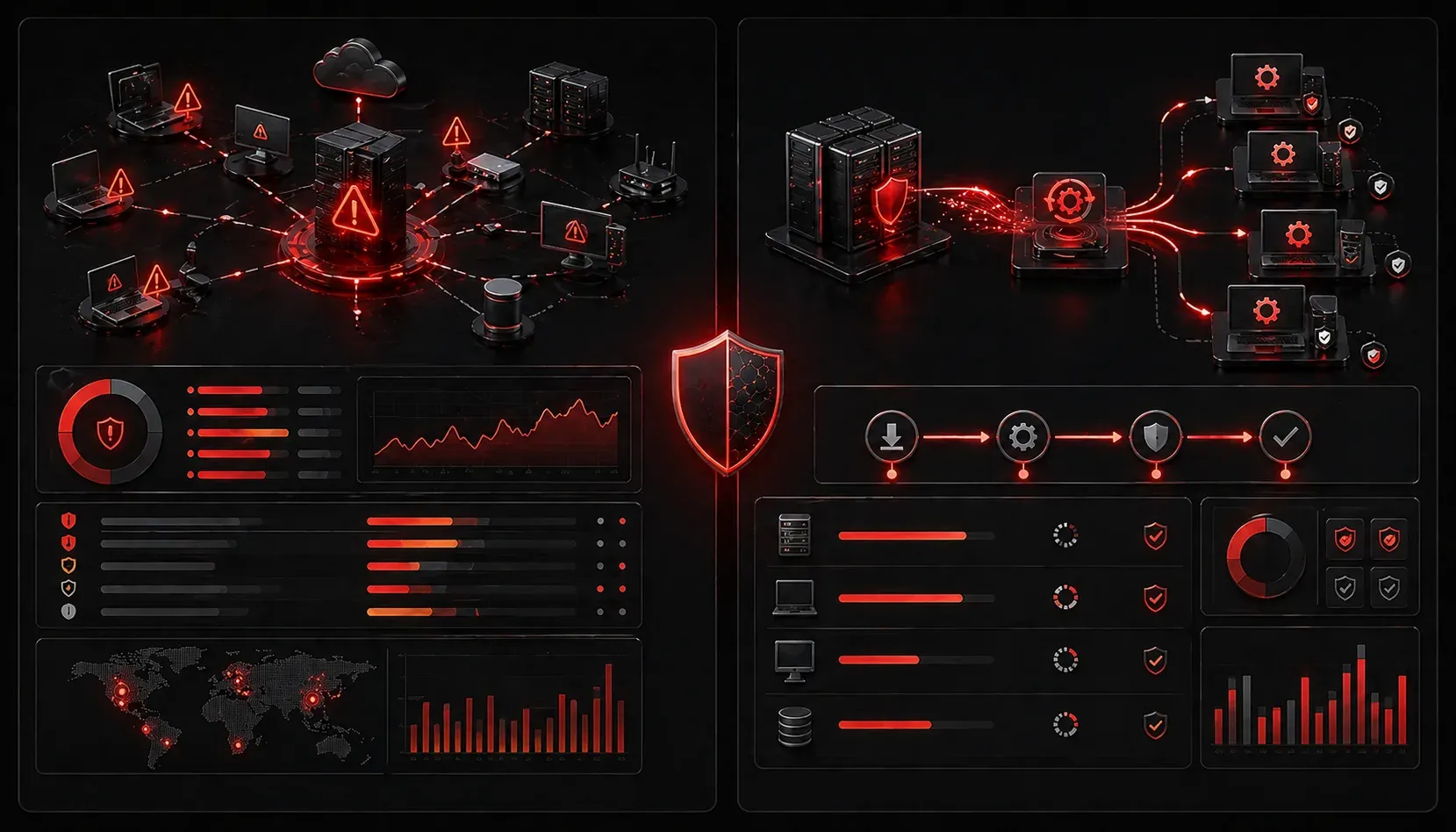
When diving into cybersecurity, you'll quickly encounter two critical processes that sound similar but serve distinct purposes: vulnerability management and patch management. While these security practices work hand-in-hand, understanding their differences is essential for building effective defense strategies.
What is Vulnerability Management?
Vulnerability management is the comprehensive process of identifying, evaluating, prioritizing, and mitigating security weaknesses in your systems. Think of it as your organization's security health checkup; it's proactive, ongoing, and covers much more than just applying updates.
The vulnerability management lifecycle includes:
- Discovery: Scanning networks and systems to find vulnerabilities
- Assessment: Analyzing the severity and potential impact
- Prioritization: Ranking vulnerabilities based on risk
- Remediation: Taking action to address the vulnerabilities
- Verification: Confirming the vulnerabilities are properly addressed
For example, a vulnerability scan might reveal that your web server is running an outdated version of Apache with known security flaws, misconfigured firewall rules allowing unnecessary access, and weak password policies across user accounts. Vulnerability management addresses all of these findings through various remediation strategies.
What is Patch Management?
Patch management is a more focused process specifically dealing with system updates and software fixes. It's the systematic approach to acquiring, testing, and installing patches; those code updates that vendors release to fix bugs, security vulnerabilities, or add functionality.
A typical patch management process involves:
- Patch identification: Monitoring vendor releases and security bulletins
- Testing: Evaluating patches in a controlled environment
- Deployment: Installing patches across production systems
- Monitoring: Ensuring patches don't cause system issues
For instance, when Microsoft releases security updates on "Patch Tuesday," your patch management process kicks in, testing them in a lab environment before deploying them to production workstations and servers.
Key Differences in Practice
The vulnerability vs patch management distinction becomes clearer when you see how they handle the same scenario differently:
Scenario: Your vulnerability scan identifies that 50 workstations are running Windows 10 with a critical remote code execution vulnerability (CVE-2021-34527, the "PrintNightmare" vulnerability).
Vulnerability Management Response:
- Assesses the risk: High severity, affects print services
- Considers multiple remediation options: disable print spooler service, apply patches, implement network segmentation
- Prioritizes based on business impact and asset criticality
- May choose non-patch solutions if patching isn't immediately feasible
Patch Management Response:
- Identifies available patches from Microsoft
- Tests patches in a lab environment
- Schedules deployment during maintenance windows
- Focuses specifically on installing the security update
How They Work Together
These processes complement each other in your overall threat response strategy. Vulnerability management identifies what needs attention, while patch management provides one tool for addressing those findings. However, not all vulnerabilities can be fixed with patches; some require configuration changes, system hardening, or compensating controls.
Consider this workflow: Your vulnerability management program discovers that database servers have weak authentication mechanisms. While patch management might apply security updates to the database software, vulnerability management drives additional changes like implementing multi-factor authentication, encryption at rest, and access controls.
Getting Started
If you're beginning your cybersecurity journey, start by understanding that both processes are essential. Vulnerability management provides a strategic overview of your security posture, while patch management ensures you maintain current, secure software versions. Neither can effectively protect your organization alone; they're two sides of the same security coin.
What's Next: Now that you understand these foundational concepts, we'll explore specific vulnerability assessment tools and techniques in our next post, showing you how to actually implement these processes in real environments.
Tools and resources for this topic
- CompTIA Security+ Study Guide — Full SY0-701 exam coverage including threats, vulnerabilities, and mitigation.