
Comparing Wired vs Wireless Network Security
This post compares wired and wireless network security, examining physical access control, traffic interception risks, and when to choose each approach. It covers key protocols and provides practical guidance for cybersecurity beginners.

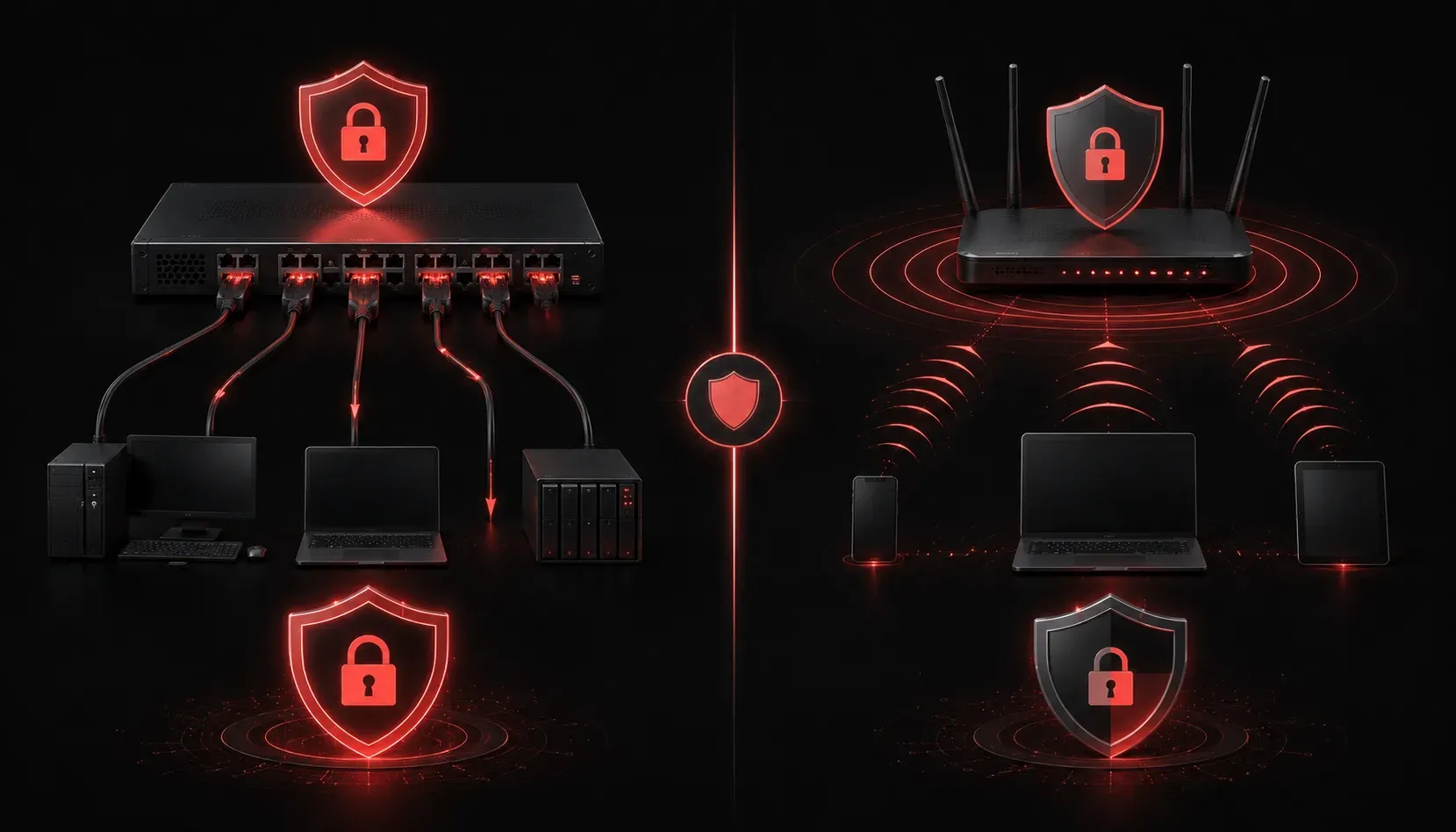
When building or securing a network, one of the fundamental decisions you'll face is choosing between wired and wireless connections. Each approach brings distinct security advantages and challenges. Understanding these differences is crucial for anyone entering cybersecurity, especially those preparing for the CCST Cybersecurity certification.
Physical Security: The Foundation Difference
The most significant difference in wired vs wireless security lies in physical access control. A wired network requires physical access to network cables or switch ports to intercept traffic. An attacker would need to be inside your building, connect to an ethernet port, or tap into cables directly. This creates a natural security barrier.
In contrast, a wireless network broadcasts signals through the air, potentially extending beyond your physical boundaries. Anyone within range of your Wi-Fi signal can attempt to intercept or access your network, even from a parking lot or neighboring building.
Traffic Interception and Eavesdropping
For wired networks, intercepting traffic requires sophisticated equipment and physical access. Attackers might use network taps or span ports on switches, but these activities are difficult to perform undetected in most environments.
Wireless networks face a different challenge. Radio frequency signals can be captured using readily available tools like Wireshark combined with wireless adapters. Even encrypted wireless traffic can be recorded for later analysis, making proper encryption absolutely critical.
Key Security Protocols
Wired networks typically rely on:
- 802.1X authentication for port-based access control
- Physical port security features on switches
- VLAN segmentation to isolate traffic
- Network access control (NAC) for device authentication
Wireless networks depend heavily on:
- WPA3 encryption (recommended) or WPA2 (still widely deployed for compatibility)
- Strong pre-shared keys or enterprise authentication
- SSID management and broadcasting policies
- Wireless intrusion detection systems
Access Control Complexity
Managing access in a wired network is relatively straightforward. You control physical ports, and users must be physically present to connect. Switch port security features like switchport port-security can limit the number of devices per port and specify allowed MAC addresses, though MAC address filtering alone should not be considered a robust security measure as MAC addresses can be easily spoofed.
Wireless access control requires more sophisticated approaches. You're managing authentication over the airwaves, dealing with roaming users, and ensuring that legitimate devices can connect while blocking unauthorized access attempts.
Performance and Reliability Considerations
From a security perspective, wired connections offer more predictable performance. There's no interference from other wireless networks, and the connection quality remains consistent, making it easier to implement security monitoring and maintain reliable VPN connections.
Wireless networks can suffer from interference, signal degradation, and varying connection quality, which can impact security tools and encrypted connections. However, modern wireless standards like Wi-Fi 6 have significantly improved reliability.
When to Choose Each Option
Choose wired networks for:
- High-security environments requiring maximum protection
- Fixed workstations and servers
- Situations where physical security can be controlled
- Applications requiring consistent, high-performance connections
Choose wireless networks for:
- Mobile device connectivity requirements
- Flexible workspace environments
- Areas where running cables is impractical
- Guest access needs (with proper segmentation)
The Hybrid Approach
Most modern networks use both wired and wireless components strategically. Critical infrastructure and fixed systems use wired connections, while wireless provides mobility for laptops, tablets, and smartphones. This network comparison shows that the best security strategy often involves using each technology where it provides the greatest advantage.
Proper network segmentation becomes crucial in hybrid environments. Guest wireless networks should be isolated from wired infrastructure networks, and different VLANs should separate various types of traffic and users.
What's Next
Understanding these fundamental differences prepares you for more advanced topics in network security. In our next post, we'll dive deeper into wireless security protocols, exploring WPA3 implementation and enterprise wireless authentication methods that help secure modern Wi-Fi networks.