
Real-World Analogies for Understanding Risk Management
This post uses everyday analogies like crossing the street and home security to explain cybersecurity risk management concepts, making these abstract principles more relatable and understandable for beginners.

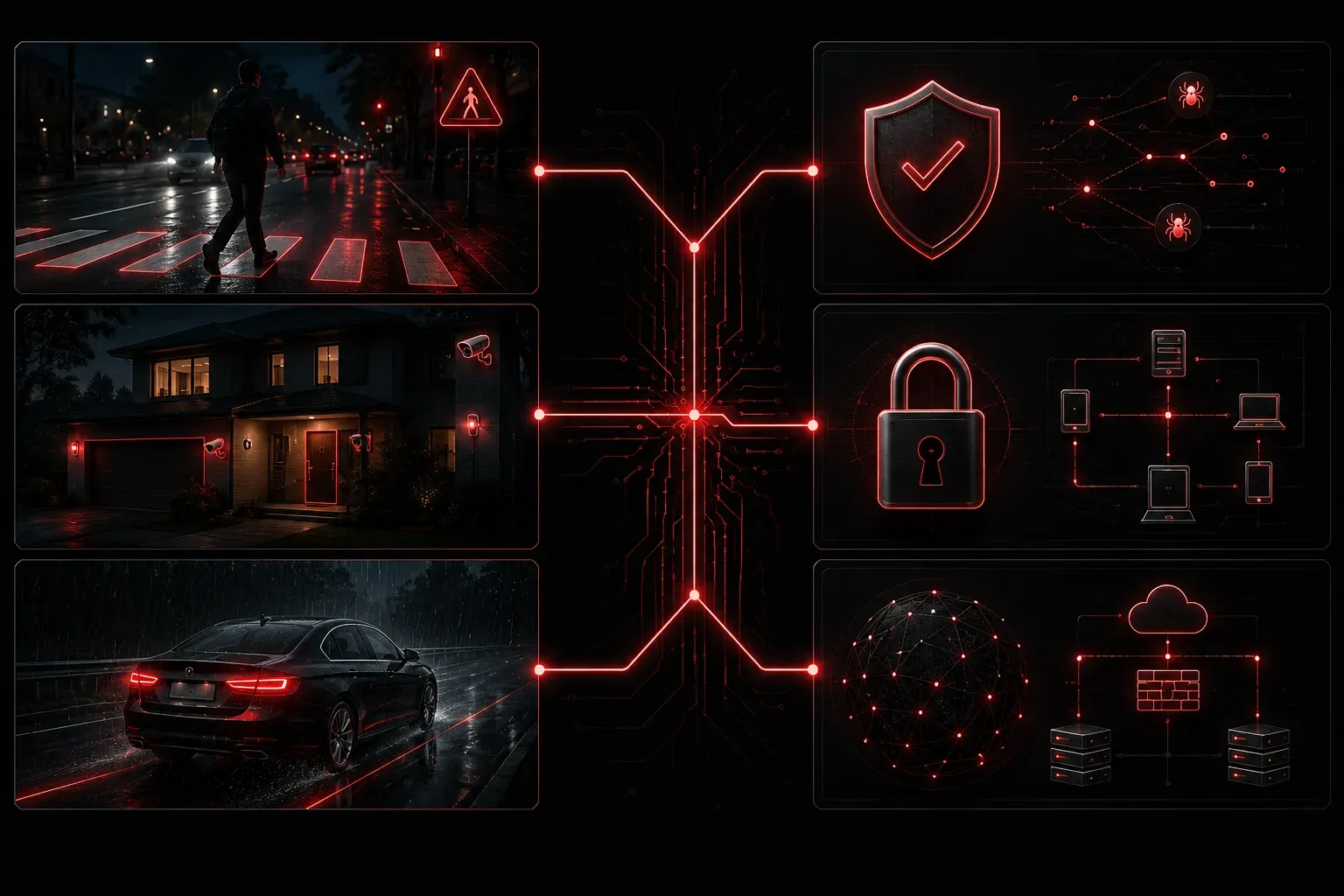
Risk management in cybersecurity can seem abstract and overwhelming when you're just starting out. But here's the thing: you already understand risk management better than you think. You make risk-based decisions every single day without even realizing it. Let's explore how everyday situations mirror the cybersecurity risk management process, making these critical concepts much more relatable.
Crossing the Street: The Perfect Risk Assessment
Every time you cross a street, you perform a complete risk assessment. First, you identify the threat - moving vehicles. Next, you assess your vulnerability - are you fast enough to cross safely? Then you evaluate the likelihood of being hit based on traffic patterns, and finally the impact - which could be severe injury or death.
Your risk calculation happens instantly: Is the street busy? Are cars moving fast? Can I see clearly in both directions? Based on this assessment, you choose your risk response - wait for a clear moment, use a crosswalk, or find an alternative route.
In cybersecurity, we follow the same process. We identify threats like malware or hackers, assess our vulnerabilities such as unpatched software, evaluate the likelihood of an attack, and determine the potential impact on our business or personal data.
Home Security: Layered Defense in Action
Your home security demonstrates another fundamental cybersecurity principle. You don't rely on just one protection method - you use multiple layers. You might have locks on doors, security cameras, motion lights, an alarm system, and even a guard dog.
Each layer serves a different purpose:
- Deterrent controls - visible cameras and alarm company signs
- Detective controls - motion sensors and security cameras
- Preventive controls - locks and reinforced doors
- Corrective controls - alarm monitoring service that calls police
If one layer fails (someone picks your lock), other layers still protect you. This is exactly how cybersecurity works - we use firewalls, antivirus software, user training, backup systems, and monitoring tools to create multiple defensive layers.
Driving: Continuous Risk Monitoring
When you drive, you constantly monitor and adjust your risk posture. You check mirrors, maintain following distance, and slow down in bad weather. You don't just assess risk once at the beginning of your trip - it's an ongoing process.
Weather changes your risk calculation completely. In heavy rain, you increase following distance, reduce speed, and maybe even postpone the trip. You've just performed dynamic risk assessment and implemented risk mitigation strategies.
Cybersecurity requires the same continuous vigilance. Network conditions change, new threats emerge, and security patches are released. Organizations must constantly monitor their security posture and adjust controls accordingly.
Insurance: Transferring and Accepting Risk
Your car insurance perfectly illustrates two key risk management strategies. You transfer risk by paying premiums to an insurance company - if something bad happens, they cover the financial impact. But you also accept risk through your deductible - you're willing to pay the first $500 or $1000 of any claim.
You make conscious decisions about how much risk to transfer versus accept based on cost and your risk tolerance. Higher deductibles mean lower premiums but more personal financial risk.
Organizations use the same approach with cyber insurance and risk acceptance policies. They might accept the risk of minor security incidents while transferring the risk of major data breaches to insurance companies.
Personal Health: Risk vs. Benefit Analysis
Consider how you approach personal health decisions. Taking medication involves weighing potential side effects against health benefits. Flying involves accepting small risks for significant travel benefits. Even eating at a new restaurant involves assessing food safety risks.
You don't eliminate all health risks - that would be impossible and impractical. Instead, you make informed decisions about which risks are acceptable based on the benefits and your personal situation.
Cybersecurity follows identical logic. Organizations can't eliminate all cyber risks without shutting down completely. Instead, they identify which risks are acceptable for their business needs and implement appropriate controls for the rest.
Making It Practical
These real-world analogies help demystify cybersecurity risk management because they connect to experiences you already understand. The key insight is that risk management isn't about achieving perfect security - it's about making informed decisions that balance security, cost, and business needs.
Just like you don't wrap yourself in bubble wrap before leaving the house, organizations can't implement every possible security control. The goal is finding the right balance of protection for your specific situation and risk tolerance.
What's Next
Now that you understand risk management through familiar analogies, the next step is learning the formal risk assessment process that cybersecurity professionals use. We'll explore how to systematically identify, analyze, and prioritize risks using established frameworks and methodologies.