Programming JavaScript Variables: var, let, and const Learn the differences between JavaScript's three variable declaration keywords: var, let, and const. Understand scope, hoisting, and reassignment rules to write better JavaScript code.
Programming Your First JavaScript Program A beginner-friendly guide to creating your first JavaScript program, covering setup, Hello World example, and basic interactive elements. Includes practical code examples and common mistakes to avoid.
Programming Setting Up Your JavaScript Development Environment A comprehensive guide to setting up a JavaScript development environment, covering Node.js installation, VS Code configuration, essential extensions, and creating your first project structure for beginners.
Programming How JavaScript Works in the Browser This post explains how JavaScript executes in web browsers, covering the JavaScript engine, DOM manipulation, event-driven programming, and the browser's execution environment. Perfect for beginners learning web development fundamentals.
Programming What Is JavaScript and What Can It Do JavaScript is a versatile programming language that powers web interactivity, server applications, mobile apps, and desktop software. Originally created for web browsers, JavaScript now enables full-stack development across multiple platforms.
Programming Bash While Loops Learn how to use while loops in bash scripting to repeat commands based on conditions. Covers basic syntax, common patterns like file processing and menu systems, and practical examples including infinite loop prevention.
Programming Bash For Loops Learn how to use Bash for loops to iterate through lists, files, arrays, and command output. Covers basic syntax, practical examples, and best practices for automating repetitive tasks in shell scripts.
Programming Bash If Else Statements Learn how to use if-else statements in bash scripts to make decisions based on conditions. Covers basic syntax, multiple conditions with elif, common test operators, and best practices for writing reliable conditional statements.
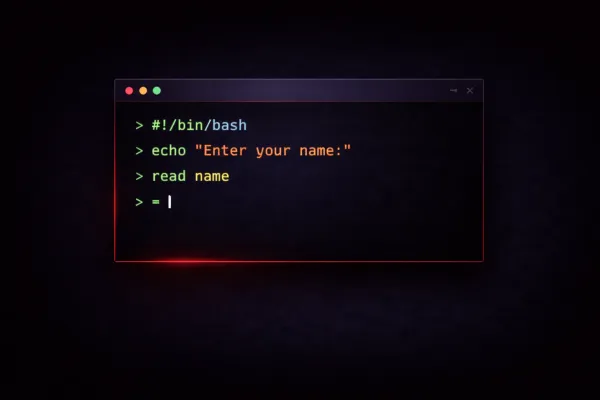
Programming Bash User Input with the Read Command Learn how to capture user input in bash scripts using the read command. This beginner-friendly guide covers basic input capture, prompts, silent input for passwords, timeouts, and practical examples for interactive scripts.
Programming Bash Variables: Storing and Using Data Learn how to create, assign, and use variables in Bash scripting. This beginner-friendly guide covers variable syntax, types, environment variables, special variables, and best practices with practical examples.
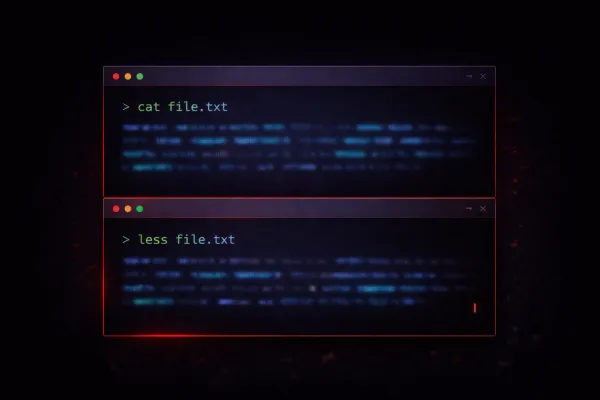
Programming Reading Files in the Terminal Learn essential terminal commands for reading files including cat, less, head, and tail. Covers practical usage scenarios and tips for viewing file contents efficiently in Linux and Unix systems.
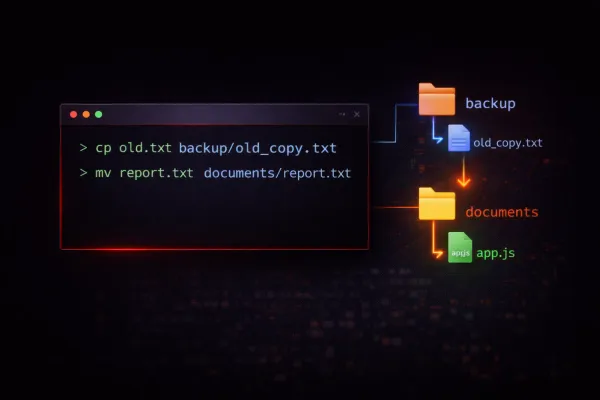
Programming Copying and Moving Files in Bash Learn the essential bash commands cp and mv for copying and moving files in Linux. Covers basic syntax, directory operations, safety options, and practical examples for effective file management.
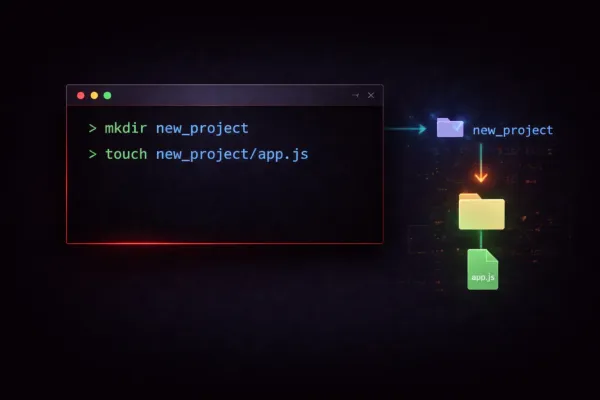
Programming Creating and Deleting Files and Folders in Bash Learn essential Bash commands for creating and deleting files and folders. Covers touch, mkdir, rm, and rmdir commands with practical examples and safety tips for managing your filesystem efficiently.
Programming Navigating the Filesystem with Bash Learn essential Bash commands for navigating the filesystem including pwd, ls, cd, and path shortcuts. Perfect introduction for beginners learning command line basics.
Programming Your First Bash Commands Learn essential Bash commands including navigation (pwd, ls, cd), file operations (mkdir, touch, cp, mv, rm), and content viewing (cat, less, head, tail). These fundamental commands form the foundation for all command line work.
Programming Opening a Terminal: Windows, macOS, and Linux Learn how to open a terminal on Windows, macOS, and Linux systems. Covers multiple methods for each operating system including keyboard shortcuts, menu navigation, and built-in applications.
Programming What Is Bash and Why Should You Learn It Bash is a command-line interpreter that acts as an interface between users and the operating system. Learning Bash improves efficiency through automation, system administration capabilities, and universal availability across platforms.