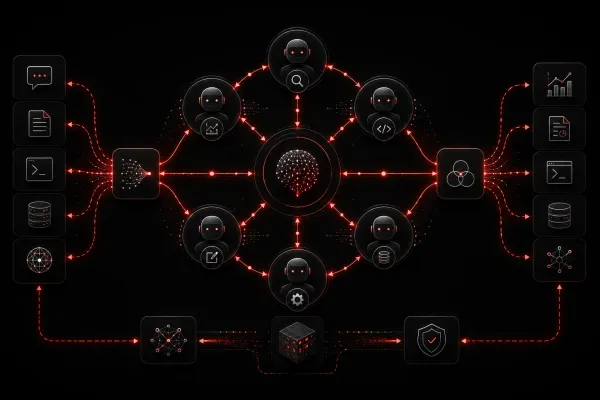
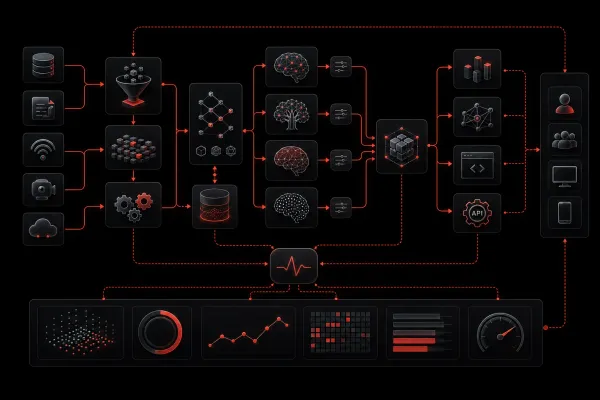
AITECH How to Orchestrate Multi-Agent AI Systems This post explains how to orchestrate multi-agent AI systems for IT workflows, covering core components like agents, tools, orchestrators, and memory. It walks through a practical IT use case, introduces popular frameworks like CrewAI and LangGraph, and outlines key orchestration patterns and commo
AITECH Agentic vs Generative AI: Choosing the Right Tool for Your IT Needs This post compares agentic and generative AI, explaining how each works and when to use them in IT environments. Generative AI excels at content creation and explanation, while agentic AI is suited for autonomous, multi-step workflows that interact with live systems. IT professionals will come away
AITECH How Autonomous Decision-Making Works in AI Agents This post explains how autonomous decision-making works in AI agents, covering the core Observe-Orient-Decide-Act loop, the ReAct reasoning pattern, and practical IT applications like incident response and configuration drift detection. It also emphasizes the importance of guardrails to keep autono
AITECH Generative AI in IT: How to Leverage Its Capabilities This post introduces Generative AI in IT, covering what makes AI generative, key use cases like code generation, documentation, and automation, and how it differs from agentic AI. It provides practical examples IT professionals can apply immediately, while clearly defining the boundaries of AI crea
AITECH Understanding AI Agent Design Principles This post covers the fundamental principles of AI agent design, including single responsibility, explicit tool definitions, human-in-the-loop checkpoints, structured outputs, and failure planning. It is written for IT professionals who are ready to move beyond basic AI prompts and build reliable, p
AITECH Understanding Agentic AI: Practical Applications for IT Professionals This post explains the key differences between generative and agentic AI, breaking down what makes agentic systems unique and why they matter for IT professionals. It covers practical agentic AI applications including incident triage, network auditing, and security research. The post gives learners
AITECH Comparing Data Privacy Tools for AI Systems This post compares the major categories of data privacy tools available for AI systems, including DLP platforms, prompt filtering libraries, private deployment options, and access control solutions. It helps IT professionals and practitioners choose the right combination of tools based on their env
AITECH Comparing AI Tools for Data Preparation: Which One Suits Your Needs? This post compares the most practical AI tools for data preparation, including ChatGPT Advanced Data Analysis, Julius AI, Python with AI copilots, and Akkio. It covers their strengths across data cleaning, formatting, and automated quality checks. Readers learn how to choose the right tool based on
AITECH Privacy and Security in AI Model Hosting This post explains the privacy and security trade-offs between cloud-hosted and locally-hosted AI models. It covers what data you're trusting to cloud vendors, what responsibilities come with local hosting, and how to choose the right approach based on your use case and data sensitivity.
AITECH Common Use Cases for Generative AI Models This post explores the most practical generative AI use cases for technical professionals, including content creation, code generation, text summarization, and research assistance. It includes real prompt examples and working code to illustrate each use case. Readers come away with a clear mental m
AITECH Automating Documentation with AI: Benefits and Tools AI documentation automation tools can transform documentation from a dreaded afterthought into a fast, consistent part of your workflow. This post covers why documentation accuracy suffers, what automated documentation tools actually produce, and how to get started with tools like GitHub Copilot, N
AITECH Improving Error Handling with AI: A Practical Guide This post shows beginners how to use AI tools like ChatGPT and Claude to audit and improve error handling in Python scripts and automation workflows. It covers prompting strategies, code examples showing weak versus improved error handling, and how to use AI to interpret cryptic error messages and
AITECH How AI Enhances Debugging for IT Professionals This post introduces IT professionals to AI debugging tools and explains how they can speed up error identification and code review. It covers practical tools like GitHub Copilot and ChatGPT, and provides a simple workflow for integrating AI into daily debugging tasks. Readers learn not just how to
AITECH Understanding Constraints in Prompt Engineering Prompt engineering constraints are specific boundaries that guide AI behavior and improve response quality. This beginner-friendly guide explains different types of constraints and how to implement them effectively.
AITECH AI Governance vs. Risk Management: Key Differences AI governance sets strategic frameworks and principles for AI programs, while AI risk management focuses on identifying and mitigating specific operational threats. Both work together to ensure responsible AI deployment aligned with organizational goals.
AITECH Token Usage vs Context-Window: Which Matters More? Compares token usage and context-window management for AI applications, explaining when to prioritize each factor based on cost, quality, and latency requirements. Provides practical guidance for balancing these competing concerns.
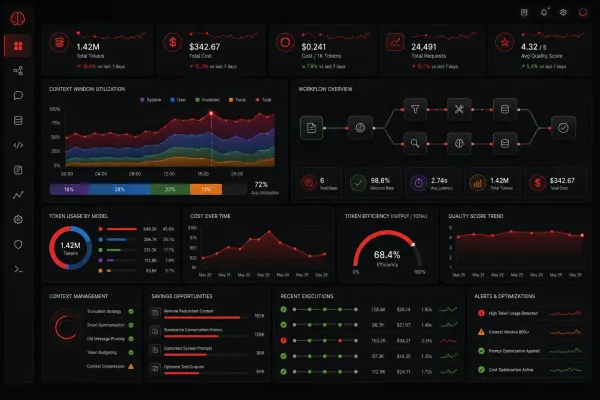
AITECH Optimizing Context-Window for Better AI Output Learn practical strategies for managing AI context windows to improve output quality while controlling costs and reducing latency. Covers prioritization techniques, progressive context building, and cost optimization methods for better workflow automation.
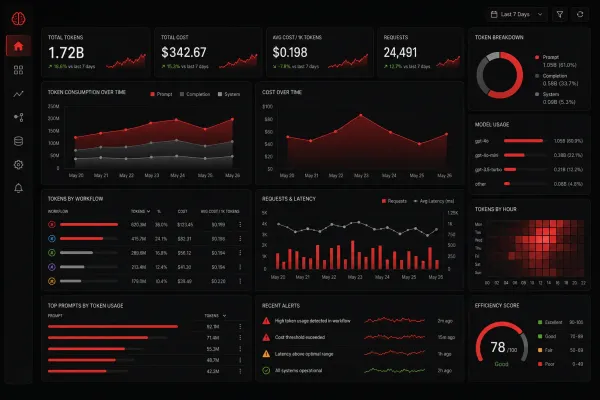
AITECH How Token Usage Affects AI Tool Performance Learn how token usage affects AI tool performance including cost, latency, and output quality. Discover practical strategies for optimizing token consumption and managing context windows effectively.
AITECH AI in Software Testing: Enhancing Quality Assurance AI is revolutionizing software testing by automating repetitive tasks, generating intelligent test cases, and predicting where bugs are most likely to occur. This guide explores practical AI testing tools and implementation strategies for modern quality assurance workflows.
AITECH Comparing AI Workflow Monitoring Tools: Which is Best for You? A comprehensive comparison of AI workflow monitoring tools including MLflow, Weights & Biases, Neptune, and cloud-native solutions. Helps IT professionals choose the right monitoring solution based on team size, infrastructure, and technical requirements.
AITECH Ensuring Performance and Reliability in AI Workflows This post explores essential strategies for building reliable AI workflows, covering design principles, monitoring approaches, and performance optimization techniques. It provides practical guidance for ensuring consistent AI operations in production environments.
AITECH How to Monitor AI Workflows Effectively Learn practical methods to monitor AI workflows effectively, including essential tools, key metrics to track, and techniques for identifying performance issues early. Covers logging strategies, alerting systems, and dashboard design for AI workflow monitoring.
AITECH AI Workflow Design Principles for IT Professionals This post covers essential AI workflow design principles for IT professionals, focusing on creating modular, scalable workflows with proper error handling, fallback mechanisms, and performance monitoring to successfully integrate AI into existing systems.
AITECH Connecting RAG with Vector Databases and Embeddings This post explains how RAG, vector databases, and embeddings work together as an integrated system to enhance AI models. It covers the complete workflow from data preparation to response generation, showing how these technologies solve key problems in AI systems through intelligent data retrieval r
AITECH Comparing AI Code Assistants: Which Tool is Right for You? A comprehensive comparison of leading AI code assistants including GitHub Copilot, Claude, ChatGPT, Cursor, and Codeium, examining their features, pricing, and ideal use cases to help developers choose the right tool for their workflow.