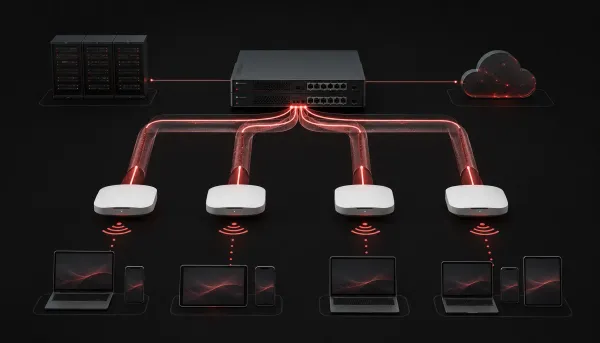
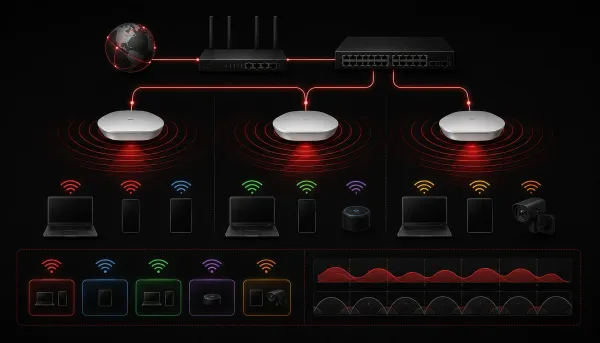
CCNA Setting Up a Wireless Access Point This guide covers the essential steps for setting up a wireless access point, from physical installation to security configuration and connectivity testing. Perfect for CCNA candidates learning wireless network fundamentals.
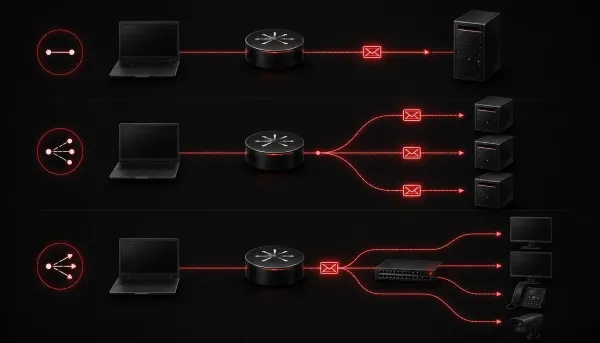
CCNA Exploring IPv6 Multicast Addresses IPv6 multicast addresses enable efficient one-to-many communication by sending packets to specific device groups rather than broadcasting to all devices. They begin with FF and include scope information to control how far the traffic travels.
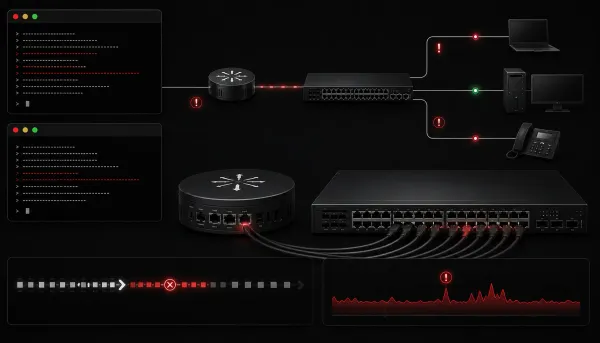
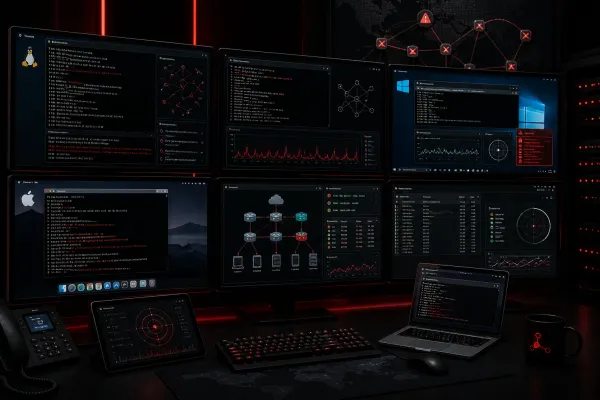
CCNA Comparing IP Configuration Across Windows, Mac, and Linux A comparison of IP configuration methods across Windows, Mac, and Linux, covering command line tools, graphical interfaces, and key differences in network information display for cross-platform network troubleshooting.
CCNA Step-by-Step IPv4 Subnetting Guide for Beginners A comprehensive IPv4 subnetting guide for beginners covering the step-by-step process of dividing networks, with practical examples and exercises. Learn to calculate subnets, determine block sizes, and avoid common mistakes.
CCNA Understanding Modified EUI 64 in IPv6 Modified EUI-64 automatically generates IPv6 interface identifiers from MAC addresses by inserting FF-FE, flipping the universal/local bit, and formatting the result. This process creates unique 64-bit identifiers for the interface portion of IPv6 addresses.
CCNA How to Verify IP Parameters on Linux Learn essential Linux commands to verify IP parameters including IP addresses, gateways, and DNS settings. This beginner-friendly guide covers the ip command, hostname tools, and systematic troubleshooting approaches for network configuration validation.
CCNA What is IPv6 Anycast and How Does It Work? IPv6 anycast allows multiple devices to share the same IP address, with traffic automatically routed to the nearest available node. This addressing scheme provides automatic failover, load distribution, and optimal performance for services like DNS and content delivery.
CCNA Understanding Network Configuration on Mac OS A beginner's guide to verifying and understanding network configuration on Mac OS, covering both GUI and command-line methods for checking IP settings, DNS, and connectivity. Essential knowledge for CCNA students setting up lab environments and troubleshooting network issues.
CCNA How to Check IP Configuration on Windows Learn essential methods to check IP configuration on Windows systems using ipconfig, PowerShell, and GUI tools. Covers command-line techniques, interpreting network parameters, and basic troubleshooting for CCNA exam preparation.
CCNA Understanding IPv6 Unicast Addresses IPv6 unicast addresses come in three types: global unicast for internet routing, unique local for private networks, and link-local for local segment communication. Each serves specific networking purposes in modern dual-stack environments.
CCNA Understanding IPv6 Addressing Learn IPv6 addressing fundamentals including format, address types (unicast, multicast, anycast), and key advantages over IPv4. Essential knowledge for modern network engineers dealing with IPv4 address exhaustion.
CCNA What is Private IPv4 Addressing? Private IPv4 addressing allows networks to reuse IP addresses internally while conserving public IPv4 addresses. This post explains the three private address ranges (10.x.x.x, 172.16-31.x.x, 192.168.x.x) and how they work with NAT to enable internet connectivity.
CCNA Configuring IPv6 Addresses on Cisco Routers This guide covers the essential steps to configure IPv6 addresses on Cisco routers, including enabling IPv6 routing, assigning addresses to interfaces, and verifying the configuration with key show commands.
CCNA How to Use Private IPv4 Addresses in Home Networks A practical guide to implementing private IPv4 addresses in home networks, covering the three private IP ranges, configuration steps for routers and devices, and best practices for network setup.
CCNA IPv6 Prefix Explained: A Beginner's Guide Learn IPv6 prefixes from the ground up, including how they differ from IPv4, calculation methods, and common prefix lengths used in real networks. Essential knowledge for modern networking.
CCNA Private vs Public IPv4 Addresses: Key Differences This post explains the key differences between private and public IPv4 addresses, covering their characteristics, use cases, and how NAT enables them to work together in modern networks.
CCNA Troubleshooting IPv6 Addressing Issues Learn to troubleshoot common IPv6 addressing problems including configuration errors, connectivity issues, and neighbor discovery problems. Includes practical CLI commands and systematic troubleshooting approaches.
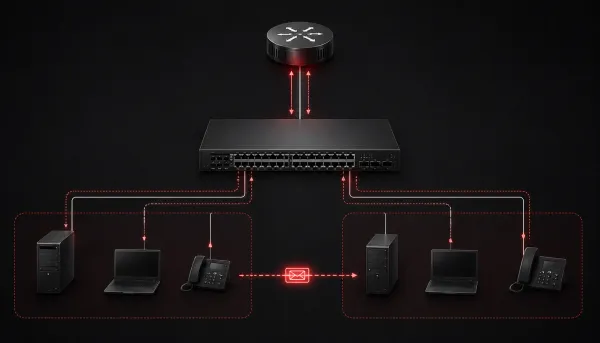
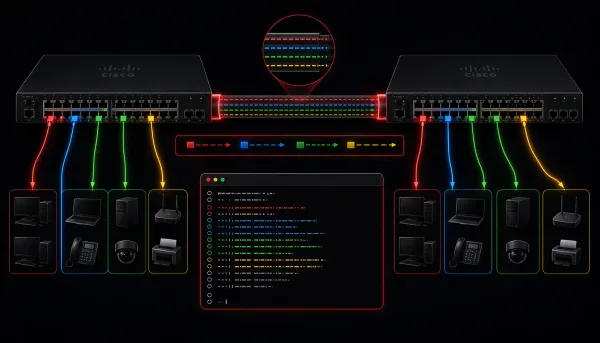
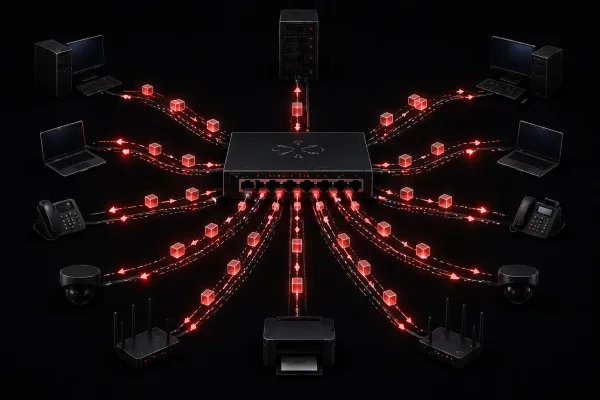
CCNA Understanding Ethernet Connections: Shared Media vs Point-to-Point Explores the key differences between Ethernet shared media and point-to-point connections, covering collision domains, bandwidth utilization, and their impact on modern network design. Essential knowledge for understanding network topology fundamentals.
CCNA How to Configure IPv4 Addressing on Cisco Routers A comprehensive guide covering the essential steps to configure IPv4 addresses on Cisco router interfaces, including verification commands and troubleshooting tips. Perfect for CCNA exam preparation and hands-on practice.
CCNA Troubleshooting TCP and UDP: Common Issues Learn essential techniques for troubleshooting TCP and UDP connectivity issues. Covers common symptoms, diagnostic commands like telnet and netstat, and systematic approaches to resolve protocol-specific problems.
CCNA What is Subnetting and Why is it Important? Subnetting divides large networks into smaller, manageable segments, improving IP address efficiency, network management, security, and performance. This fundamental concept enables logical network organization and better traffic control.
CCNA How to Configure Network Speed and Duplex Settings A comprehensive guide to configuring network speed and duplex settings on Cisco devices. Covers checking current settings, manual configuration commands, and best practices to prevent mismatches and optimize network performance.
CCNA Next-Generation Firewalls: How They Protect Your Network Next-generation firewalls enhance network security beyond traditional firewalls by providing application awareness, integrated IPS, deep packet inspection, and user-based policies for comprehensive threat protection.
CCNA WAN Network Architecture Explained for Beginners This post explains WAN network architecture fundamentals, covering common topologies like hub-and-spoke and mesh networks, connection types including leased lines and MPLS, and key design considerations for wide-area networking.
CCNA When to Use TCP vs UDP: Practical Applications This post explains when to use TCP versus UDP protocols, covering practical applications and decision-making criteria. It helps beginners understand protocol selection for different networking scenarios including web browsing, gaming, streaming, and file transfers.